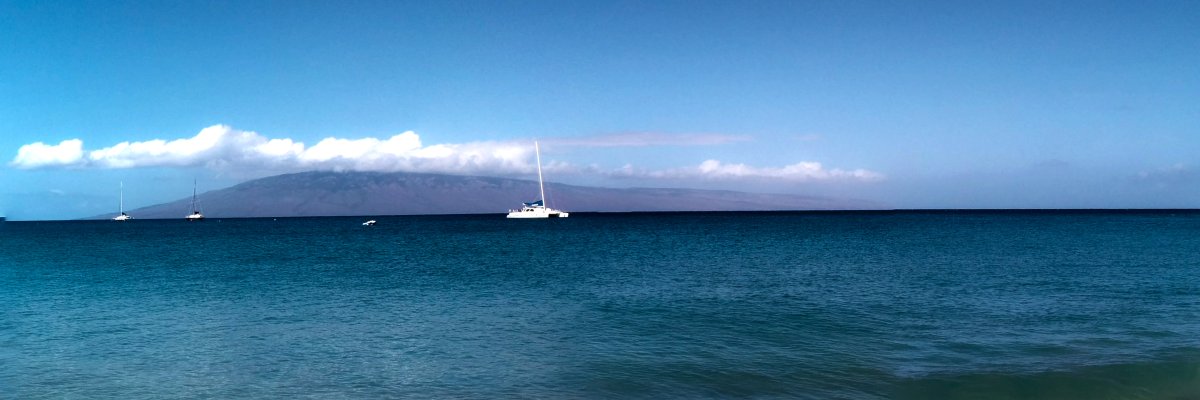
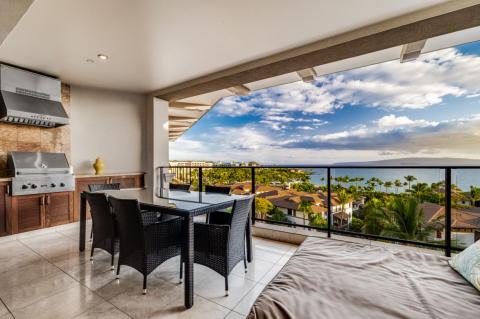
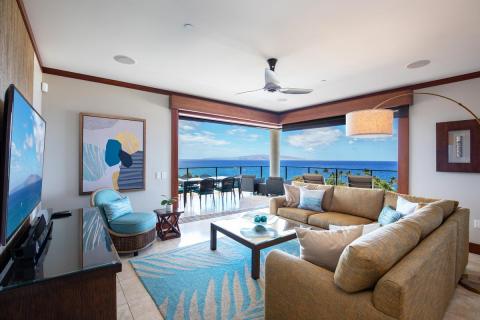
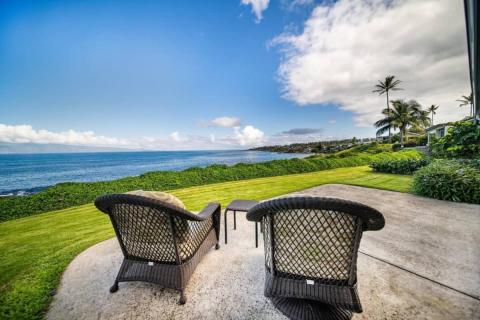
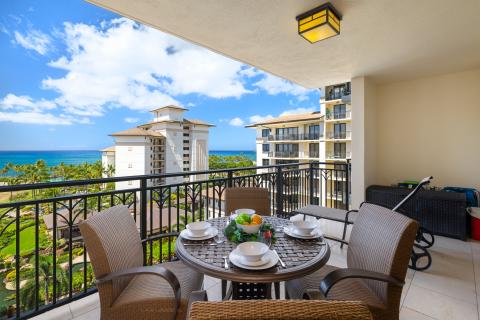
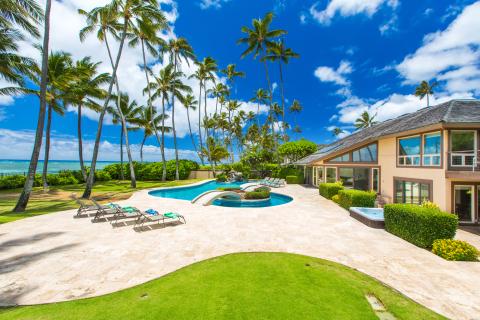
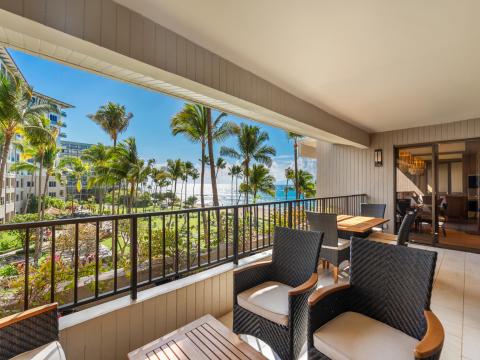
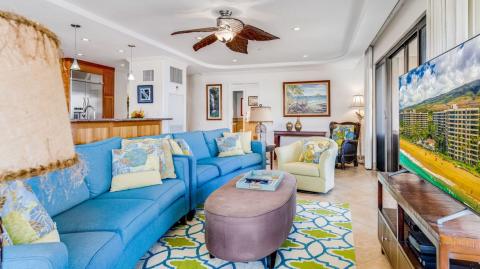
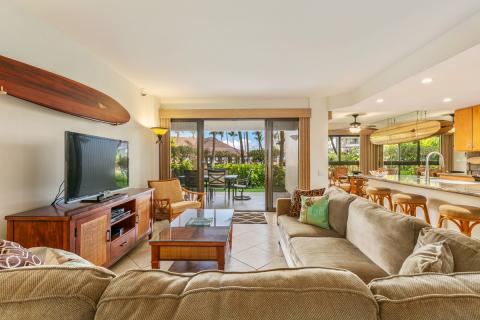
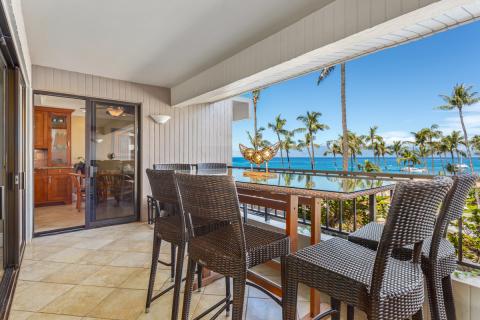
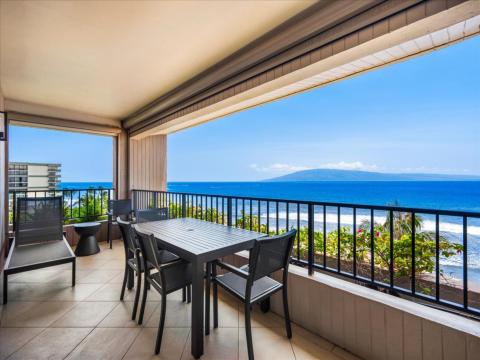
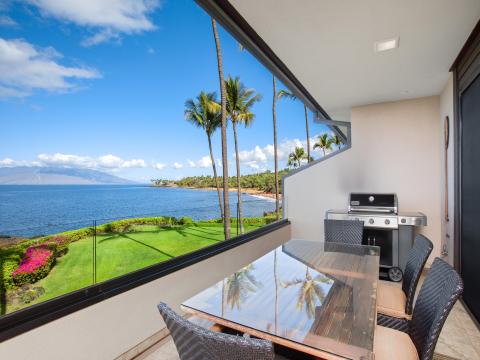
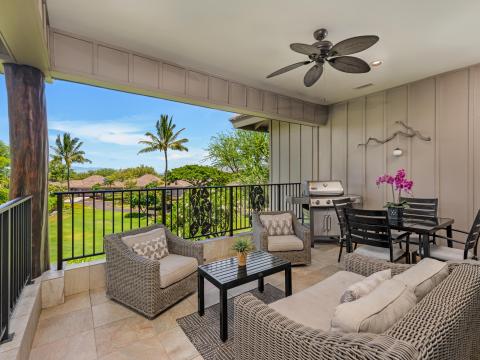
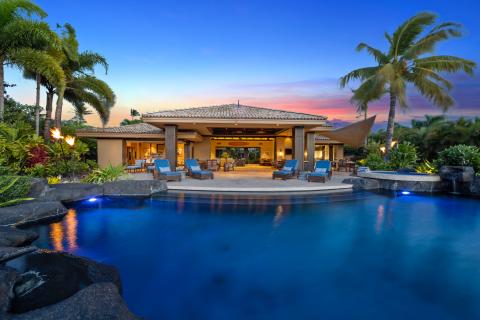
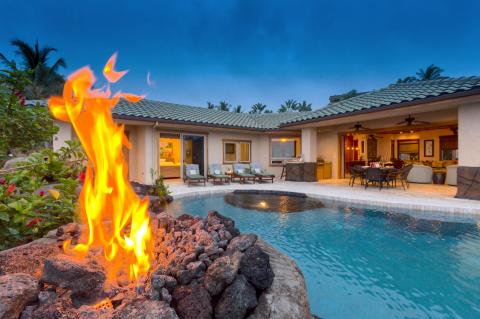
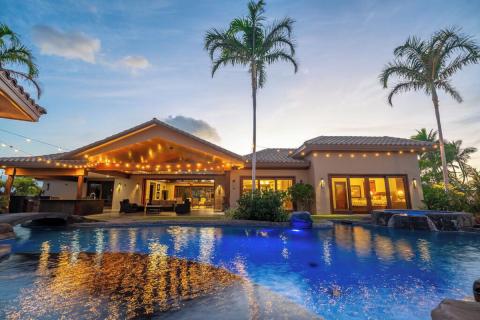
Maui and the Big Island, neighboring islands, share many similarities and differences. Both have fantastic resort communities and excellent vacation rental options, from comfortable condos to luxury villas that accommodate large groups.
Though there is a definite difference in the feel of each island, with the Big Island dominated by soaring volcanoes and dramatic jet-black lava rock coastlines, and Maui boasting some of Hawaii’s most accessible and award-winning sandy beaches.
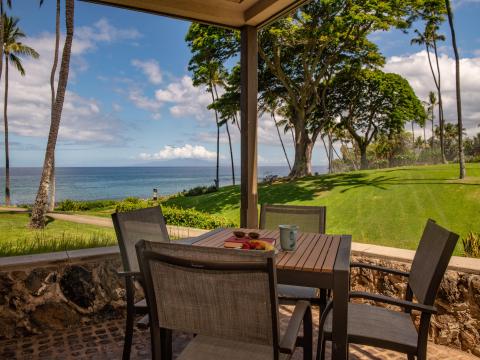
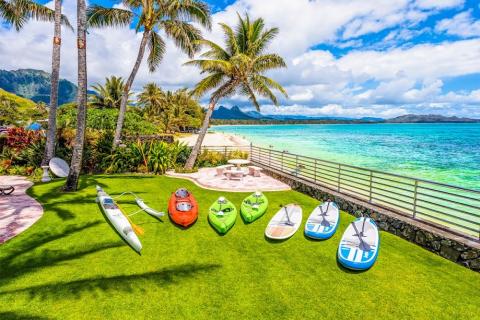
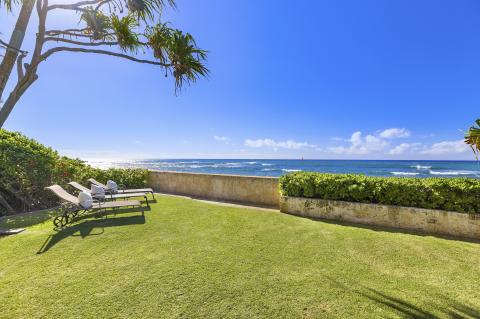
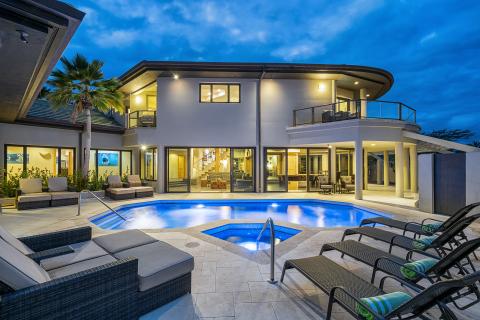
Maui's luxury beachfront villas, condo residences and hillside estates in Wailea, Kaanapali and further north along the West Maui coastline in Napili and Kapalua, put you close to or directly on stunning beaches with swimmable water and resort amenities such as golf, shopping, dining, and spas.
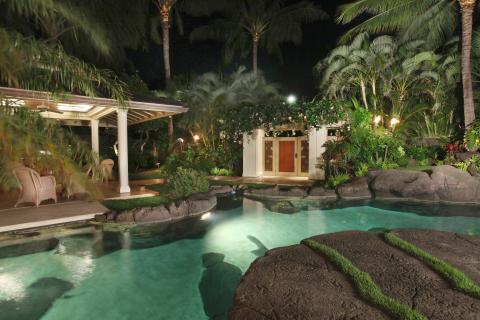
Meanwhile, the Big Island's resort communities peppered along the sunny Kohala Coast are home to incredibly luxurious vacation rentals of all sizes. Some residential communities are gated within the resorts, such as Pauoa in Mauna Lani, offering private beach clubs and an additional layer of privacy and exclusivity.
Unlike Maui, where thriving local communities existed before the planned resort areas of Kaanapali and Wailea, the majority of the Big Island's luxury vacation homes are located within planned resort communities designed from the start to be second homes and used as short-term rentals. This is why vacation rentals are a much less contentious issue on the Big Island.
While sandy beaches are at a premium on the Big Island, the access to resort amenities and the dramatic black lava coastline offer a stark beauty that keeps many visitors coming back year after year.
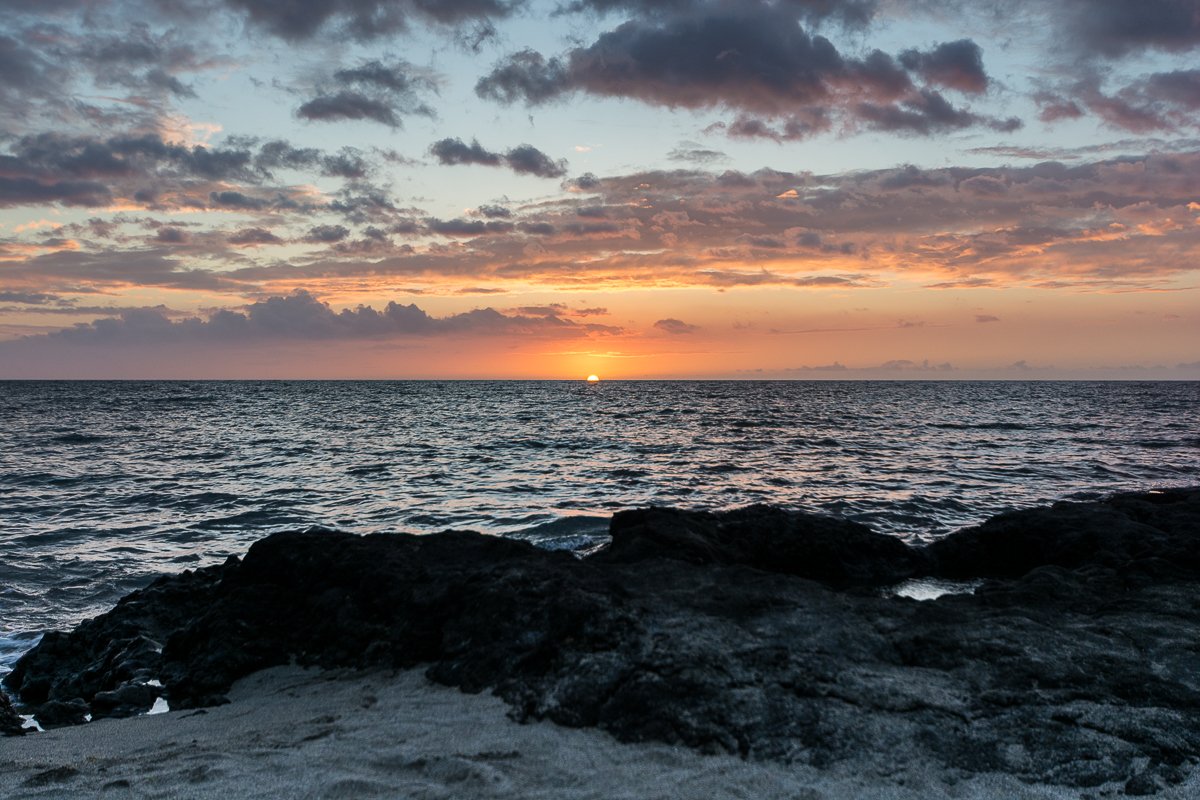
So, while both islands offer incredible rental options, each has its own personality, look, and energy. The Big Island has a distinct beauty with its stark lava landscapes and towering volcanoes, making it feel remote and otherworldly, even a little primal. And while you can still find jungles and waterfalls on the Big Island, you will need to travel a fair distance from the resorts of the sunny Kohala Coast.
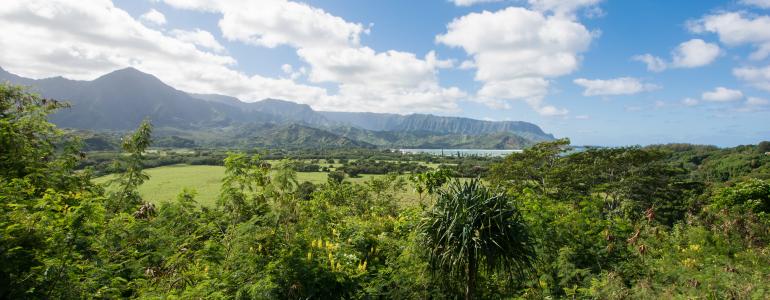
If you're seeking the Hawaii of lush green forests and towering verdant peaks that scream Polynesia, the further north you go in the Hawaiian Island chain, the more “South Pacific” the islands start to look.
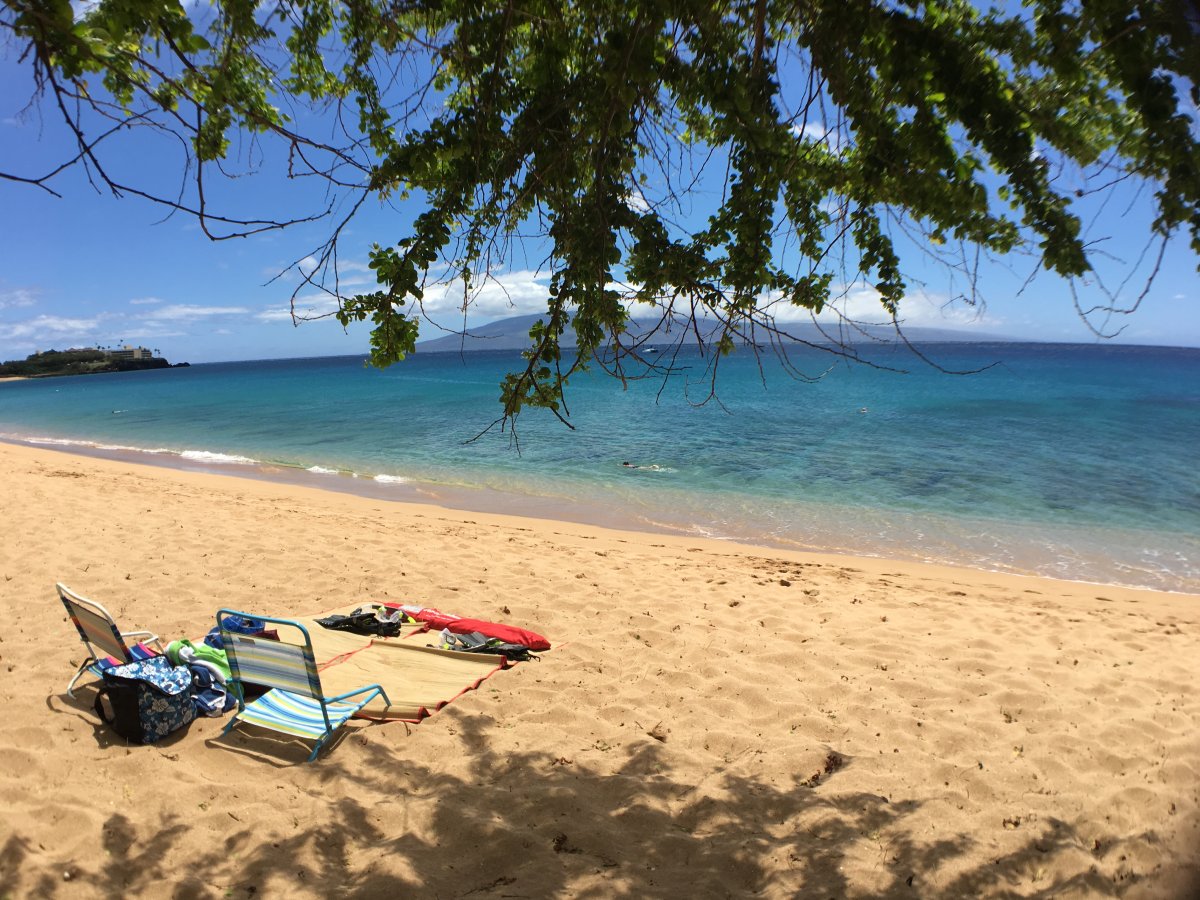
Maui is a sort of bridge between the younger Big Island and the rest of the chain, with towering Haleakala in the south, just across the channel from the northern end of the Big Island, and a greener landscape in the North with mountains that are much lower. Below is a snapshot of snorkelers enjoying the waters off Kaanapali beach in West Maui.
Size and Geography
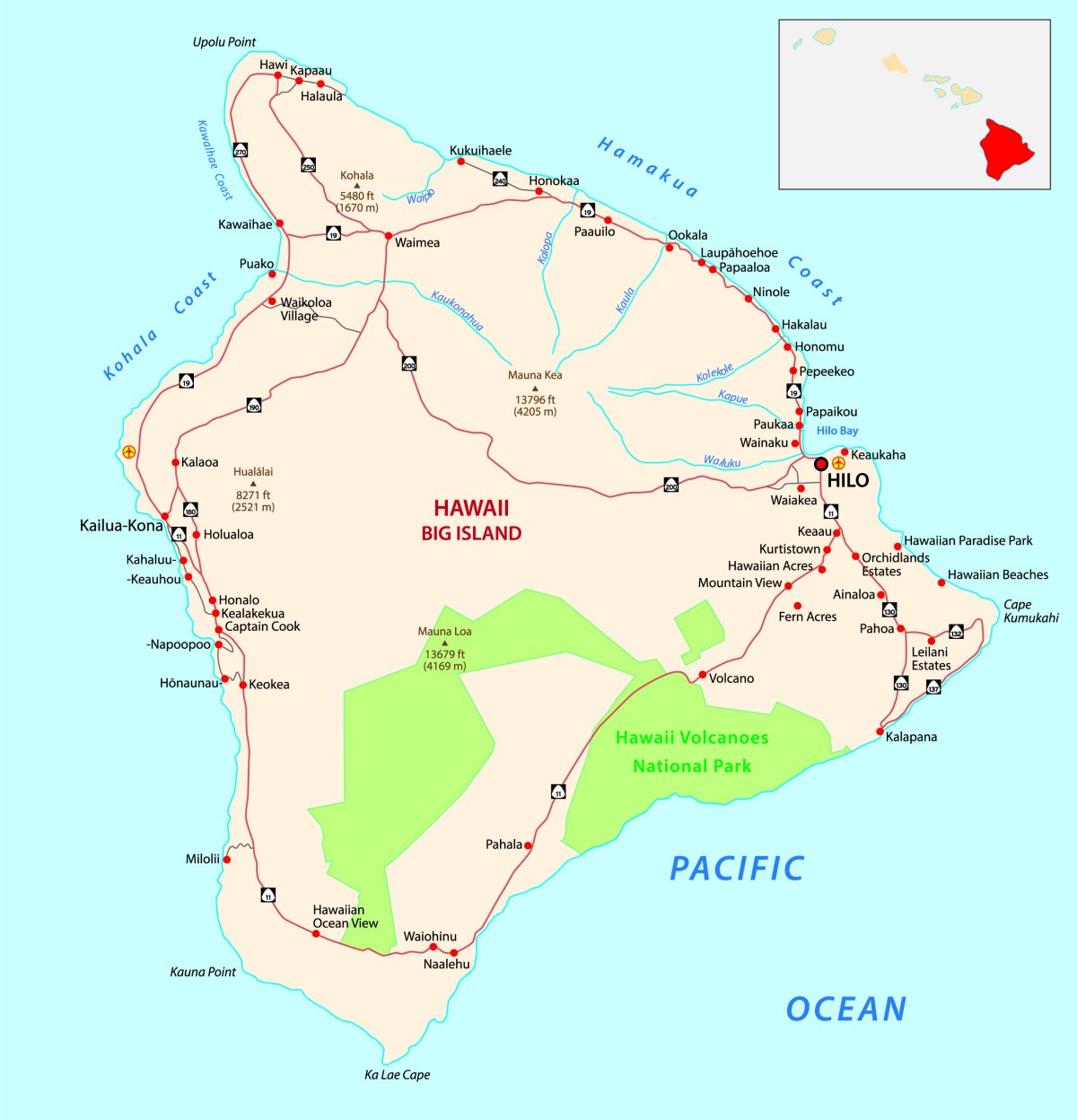
Start with raw size, because it shapes almost everything else. The Big Island (officially Hawaii Island) is the largest in the chain, roughly twice the size of all the other Hawaiian islands combined.
Maui is the second-largest island, but it's compact enough that you can drive from one end to the other in a few hours, traffic and the famous twisting Road to Hana aside. That difference matters for trip planning. On the Big Island, getting from the Kona side to the Hilo side can eat up half a day. On Maui, you can have breakfast in Kihei and be snorkeling on Kapalua Bay Beach before lunch.
Natural Attractions
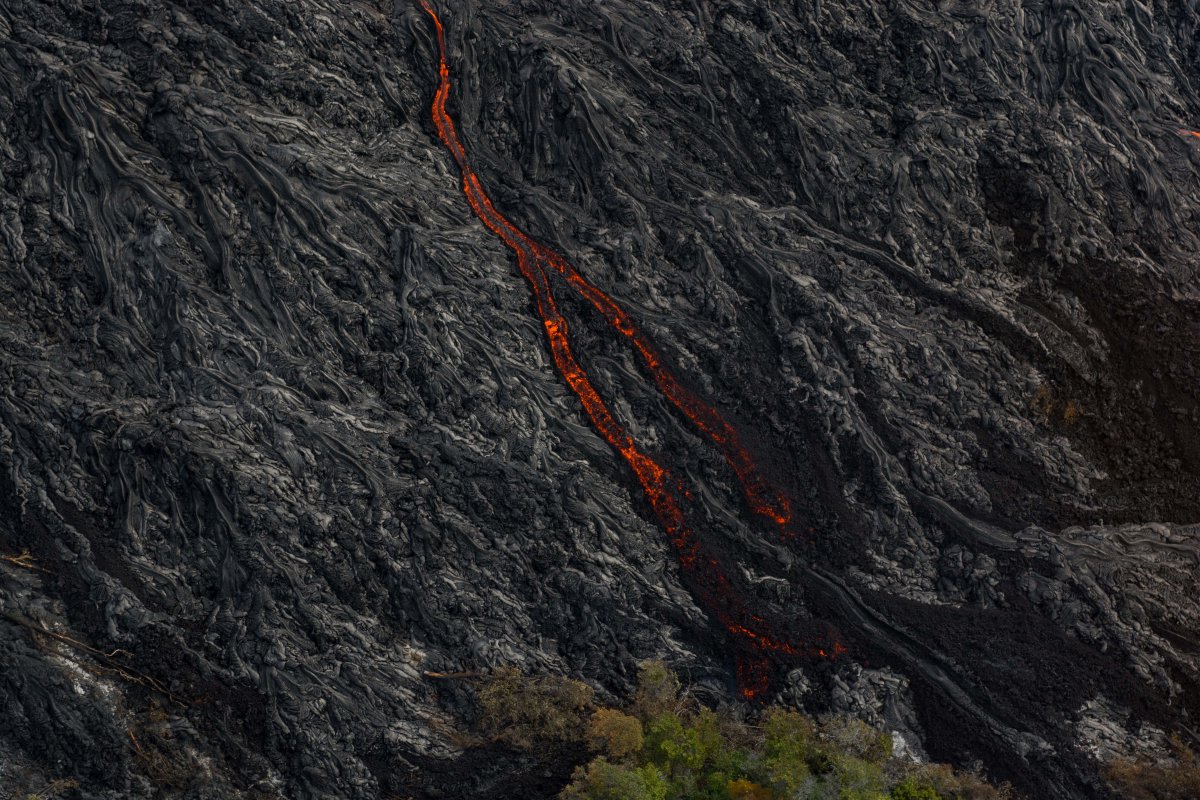
There are few places on earth where you can safely witness the spectacle of a volcanic eruption, with lava running down to the Pacific and literally creating more land in real time. The Big Island is one of those places. There are active volcanoes, Mauna Loa and Kilauea, both within Hawaii Volcanoes National Park.
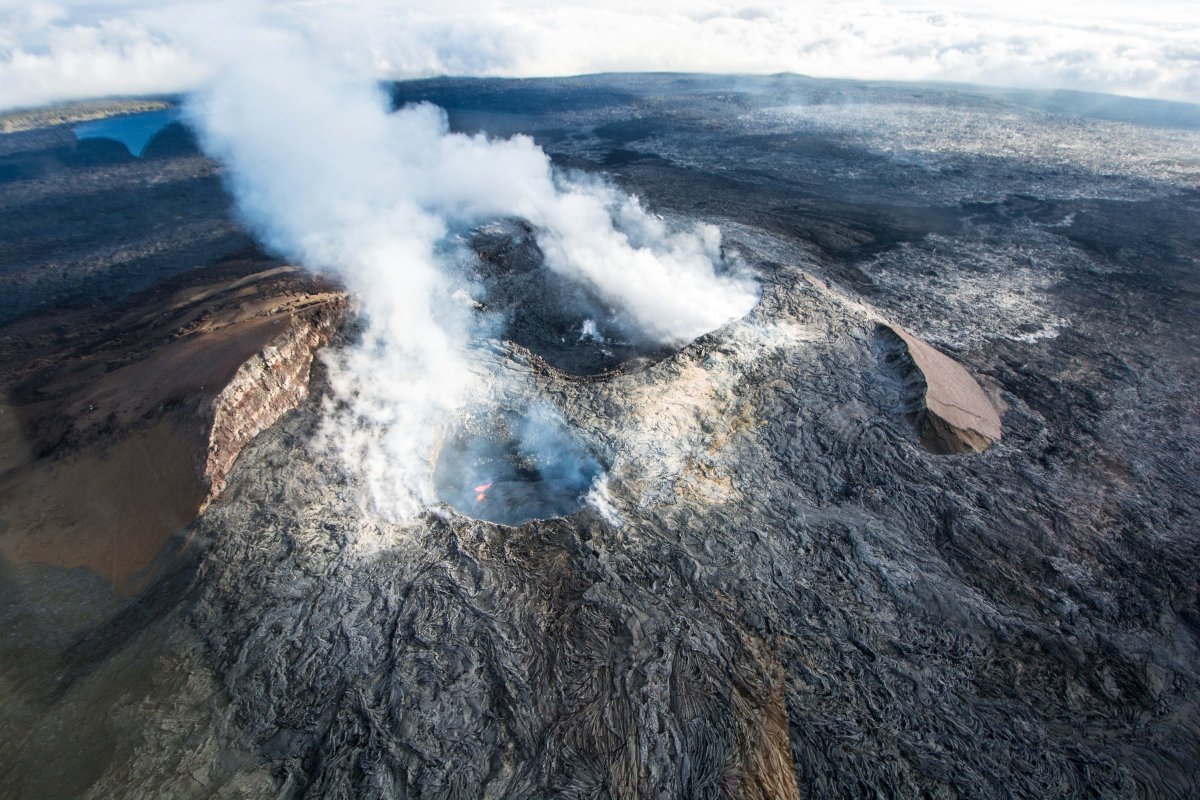
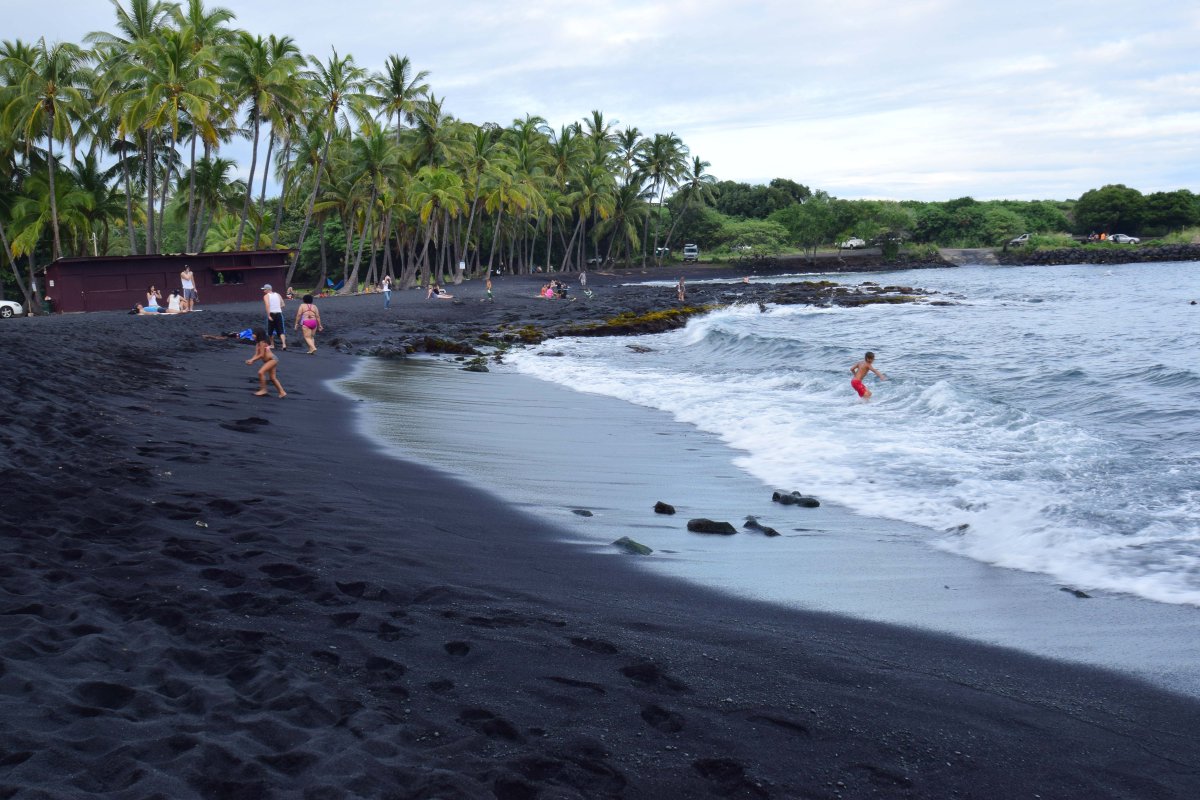
Kilauea is the most active, with lava fountains sometimes shooting 1,000 feet into the air. Depending on activity, visitors can sometimes watch fresh lava glow at night. Because the island is so geologically young and still growing, you can find beautiful black-sand beaches, one of the most famous being Punaluu Beach in the south.
Interestingly, snow-capped Mauna Kea, which, at over 13,000 feet, is technically the tallest mountain on Earth when measured from its base on the ocean floor. Below is a snapshot taken by our team member while on a helicopter tour of Volcanoes national park during a villa inspection trip of the Big Island.
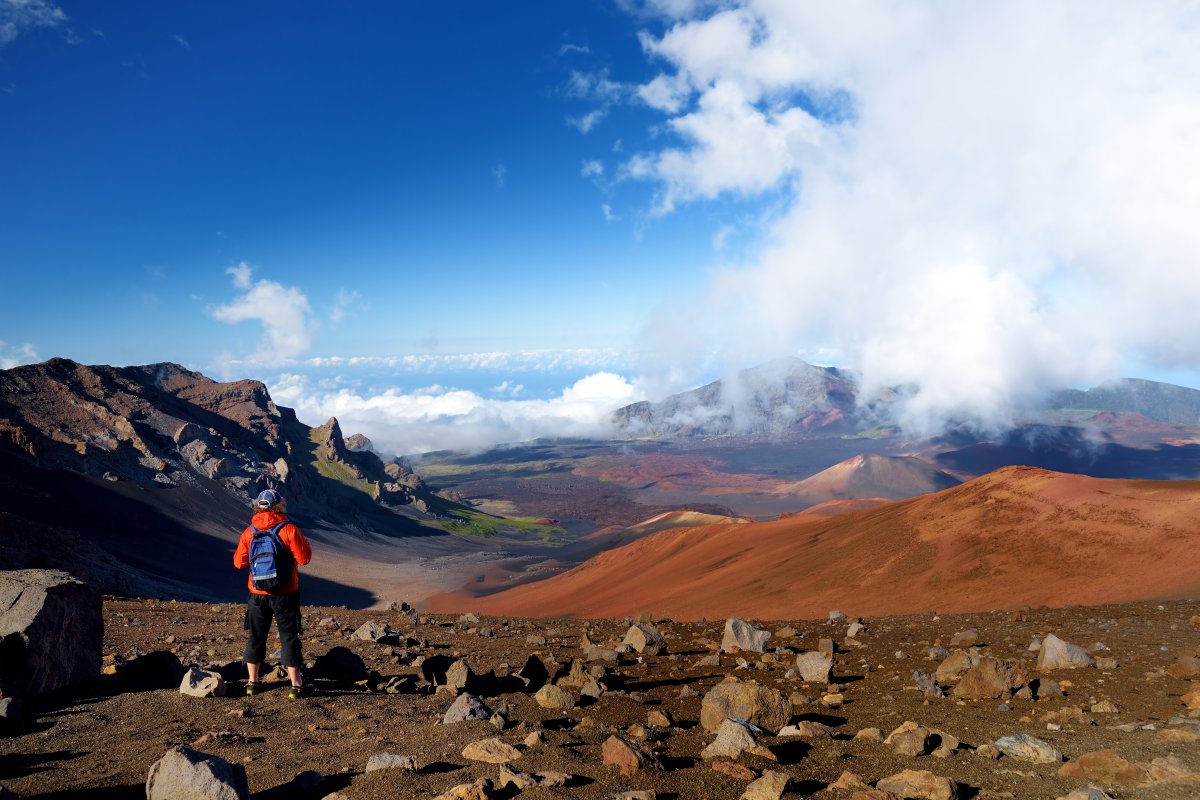
On Maui, Haleakala, the House of the Sun, is a dormant volcano whose crater rim sits above 10,000 feet and draws crowds at dawn to watch the sunrise from what feels like the edge of the world. This used to be an easy-to-plan experience and a great way to take advantage of jet lag, but today, with the island’s increased popularity, you must reserve a spot to enjoy the sunrise at Haleakala, which some describe as watching creation itself.
Another of Maui's signature experiences is the Road to Hana. The winding route follows the island's northeastern coastline, passing waterfalls, rainforest, black sand beaches, and countless scenic pullouts. The drive is less about reaching Hana than enjoying the journey itself, with something worth stopping for around nearly every bend. The road’s bamboo forests and lookout points have become a rite of passage for visitors. Where the Big Island shows raw, active geology, Maui embraces lush, layered scenery and a sense of discovery around every curve.
Weather Patterns
Both islands experience microclimates, but the Big Island has dramatic shifts in climate depending on which side of the island you are on and the elevation. You can stand in a black desert-like lava field on the Kona side, drive an hour, and end up in a rainforest near Hilo that gets over 100 inches of rain a year. Not to mention, the top of Mauna Kea experiences blizzard conditions during the winter months, creating an incredible spectacle when viewed from the balmy coast below.
Maui's weather varies dramatically as well. Generally speaking, the windward sides of all the islands, facing east, receive abundant rain and tend to be quite lush. The leeward sides, on the opposite sides of the islands, can be quite dry, making them a favorite spot for resorts.
Like the Big Island, the upper slopes of Haleakala are very temperate, and you’ll find wineries and pumpkin patches thriving on the upper and cooler elevations. The top of the crater can also see snow in winter.
West Maui (Kaanapali, Lahaina, Kapalua) and South Maui (Kihei, Wailea) generally stay warm and dry, protected by the rain shadow effect of Haleakala, while Upcountry areas like Kula run noticeably cooler.
Beaches
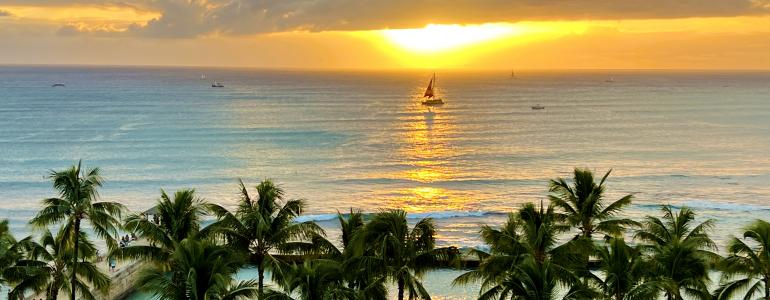
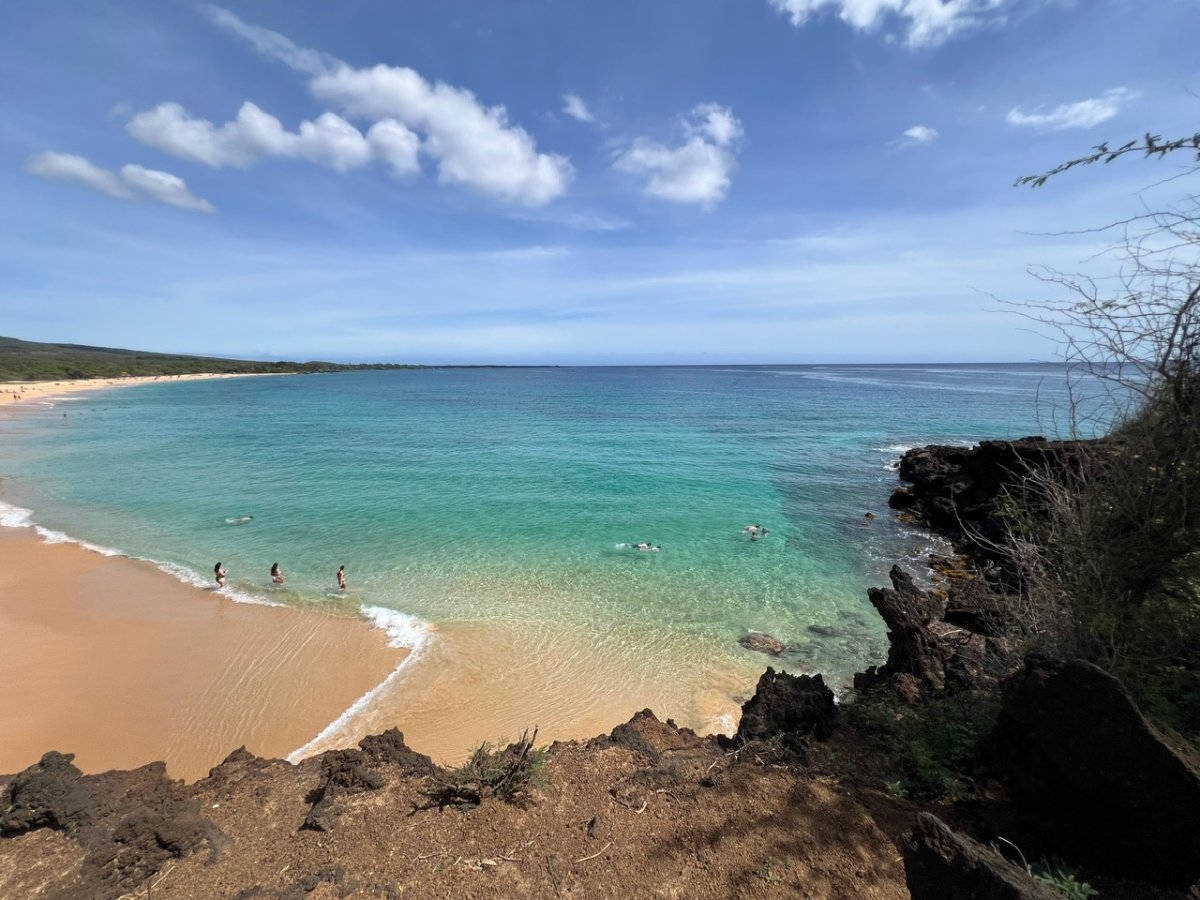
This category often settles the debate. Maui's beaches, particularly along the south and west coasts, often win the title of “Best Beaches” in America. They tend to be wide, sandy, and generally calm for much of the year, making them great for swimming, snorkeling, and lounging. Wailea Beach, Kaanapali Beach, and Napili Bay are all consistently ranked among the best in the country.
The Big Island has fewer classic sandy beaches but offers more exotic varieties, including black-sand beaches formed by volcanic rock and even a green-sand beach near South Point. Beautiful in their own right, but a different kind of beautiful, and not always as swimmable. Read our Big Island Black Sand Beach visitor guide for tips and insights.
Town Size and Character
Maui's towns carry more polish and infrastructure built up over decades of tourism.
Lahaina was historically the social hub of West Maui, but the town suffered a devastating wildfire in 2023, and the recovery is ongoing (click here to donate to Lahaina’s recovery).
While most of the historic whaling village was lost, some things have come back, including several favorite restaurants, including Star Noodle and Honu. It is hoped that the harbor will soon reopen, so visitors and locals alike can have easy access to ferries to Lanai and whale-watching cruises.
Located just to the north of Lahaina, Kaanapali and Kapalua were unaffected by the fire and continue to operate normally. Kaanapali has plenty of shopping and dining options at Whaler’s Village, and Kapalua has famous spas and golf at its resorts.
The Big Island's main towns, like Kailua-Kona and Hilo, are less centered on resort culture, with Hilo in particular retaining a working-town atmosphere rather than a tourist-centric one.
Resorts and Where Vacation Rentals Cluster
If you're booking a villa or vacation rental rather than a hotel, both islands offer excellent options, though Maui has more rentals sitting on or within walking distance of gorgeous sandy beaches.
Between Kaanapali and Wailea, Maui has built out some of the most recognizable resorts in Hawaii. Wailea in South Maui is home to five-star hotels and upscale condos that sit along a string of beaches. It consistently ranks as one of the top areas on the island for luxury vacation rentals and with direct beach access.
Kaanapali in West Maui offers a livelier beachfront with shopping and dining at Whalers Village, along with a collection of beachfront rental properties ranging from condos to standalone homes.
Kapalua, just north of Kaanapali, is quieter and more golf-and-spa-oriented. Kapalua attracts travelers who want a more exclusive experience.
Cute Kihei sits between these markers, offering more affordable condo rentals with easy beach access.
The Big Island's resorts are mainly located along the Kohala Coast, where resorts like Mauna Kea, Mauna Lani and Hualalai sit along a stretch of coastline peppered with small beaches and lagoons.
However, as already mentioned, the classic sandy beach experience on the Big Island is more limited. The beach at Mauna Kea is an exception, as it’s one of the only natural sand beaches on this side of the island and home to the first planned resort.
Due to Maui’s strict vacation rental policies, the Big Island offers more options in its resort areas.
So Which One Should You Pick?
Both islands will deliver unforgettable experiences. However, if you want a more active holiday and want to see an active volcano and a truly unique landscape, the Big Island may be for you. It can be a less classically Hawaiian tropical vibe, but there is a special energy to the island, and the resort communities along the Kohala Coast have beautiful vacation homes, access to golf and spas, and generally all the creature comforts that go along with a resort-based holiday. Just be mindful that you will have fewer sandy beach options than in Maui, as the land is newer and the coast tends to be rockier.
If you’re more about a relaxed holiday centered around long days spent playing on sandy beaches, Maui is probably a better call. On Maui, you literally have an entire coastline of beaches to explore, from busy Kaanapali to the quiet beauty of Big Beach in Makena (and Little Beach if sunning in the buff is your thing!). Maui is just as geologically fascinating as the Big Island, though it has no volcanic activity. You can hike and hike and ride down Haleakala, but you are never far from fantastic beaches framed by swaying palms and lush landscapes.
If you have never visited Hawaii, my opinion is that Maui may be a better intro to the Islands. It has well-worn resort infrastructure, incredible luxury rentals from Wailea to Kaanapali,and Kapalua. Moreover, there are fantastic shopping and dining options in lively small towns outside of the area resorts.
If you can’t decide between them and you have the time, you can combine a stay in both! The only factor that may hinder the split is minimum stay requirements, as many homes require five-night rentals. So, if you have 10 – 12 days to play with, you can easily begin on Maui and end your trip on the Big Island, allowing you to experience the best of both.
Quick Facts: Maui vs. Big Island
- Size: Big Island is roughly twice the size of Maui
- Beaches: Maui has wider, calmer, swimmable sand; Big Island has more black and green sand variety
- Volcanoes: Big Island has two active volcanoes; Maui's Haleakala is dormant
- Drive time across island: Maui, a few hours; Big Island, up to half a day
- Top vacation rental areas: Maui (Wailea, Kaanapali, Kapalua, Kihei); Big Island (Kohala Coast)
Frequently Asked Questions
Is Maui or the Big Island better for first-time visitors to Hawaii?
Maui tends to be the easier first trip. It's smaller, easier to navigate, and has a more established resort and dining infrastructure, while the Big Island rewards travelers who want to spend more time driving between very different landscapes.
Which island has better beaches, Maui or the Big Island?
Maui generally has the edge for classic swimmable, sandy beaches, particularly in Wailea and Kaanapali. The Big Island has more dramatic and varied beaches, including black- and green-sand beaches, but fewer of the wide, calm stretches Maui is known for.
Can I see an active volcano on Maui?
No. Haleakala on Maui is dormant. For active volcano activity, Hawaii Volcanoes National Park on the Big Island is the place to go.
How long does it take to drive across each island?
Maui can be crossed in a few hours outside of the Road to Hana's slower pace. The Big Island is roughly twice the size, and driving between coasts, such as Kona to Hilo, can take half a day depending on the route.
Where should I stay if I want a vacation rental near the beach?
On Maui, Wailea, Kihei, Kaanapali, and Kapalua have the largest concentration of vacation rentals near the water. On the Big Island, the Kohala Coast is the closest comparison, though overall inventory is smaller.